
In today’s competitive business landscape, inbound lead response time is critical for maximizing conversions. Responding quickly to inbound leads can dramatically increase your chances of making a sale, but speed alone isn’t enough—especially in the age of AI.
To truly succeed, a winning lead conversion strategy must combine fast responses, high-quality follow-ups, and the intelligent use of AI. This guide, based on Exabloom’s proprietary study and industry benchmarks, offers a comprehensive roadmap to optimize your inbound lead response time strategy.
What is Inbound Speed Response Time?
Inbound lead response time refers to how quickly your sales or marketing team responds after a lead expresses interest, such as through a form submission or an inbound inquiry.
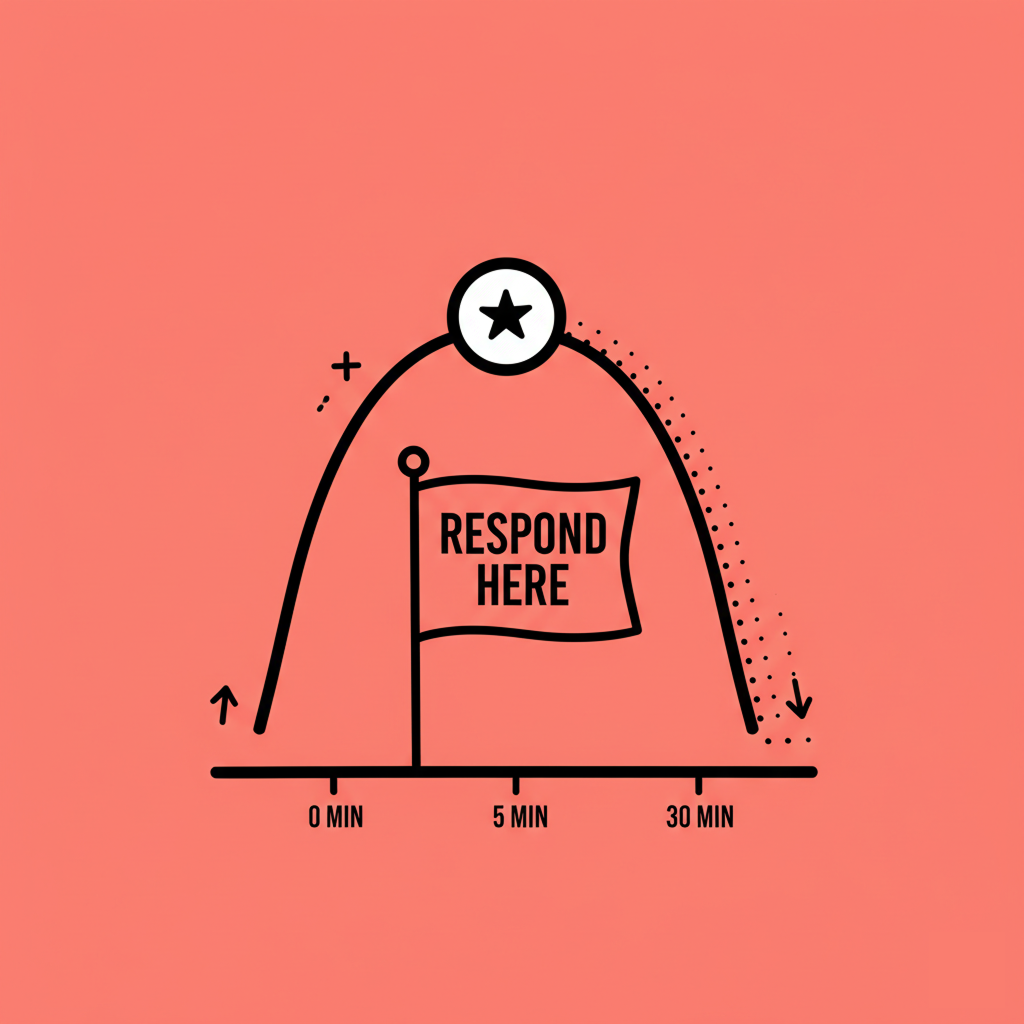
Reaching out at the peak of a lead’s interest significantly increases your chances of conversion. In today’s fast-paced digital landscape, leads expect immediate engagement—any delay can lead to lost opportunities.
Why Does Inbound Lead Response Time Matter?
- High Buyer Intent: Leads are most receptive immediately after they express interest. If they don’t hear back quickly, their interest wanes.
- Competitive Advantage: Quick responses demonstrate attentiveness and differentiate you from competitors.
- Preventing Lead Fatigue: Delays allow leads to explore other options, making timely communication essential to keeping their interest alive.
Key Inbound Lead Response Time Statistics
- Average Response Time: The average inbound lead response time for B2B businesses is 42 hours, with only 27% of inbound leads ever being contacted.
- Ideal Response Time: The ideal response time for inbound leads is 5 minutes. Companies that respond within this timeframe significantly increase their chances of conversion.
- Impact of Timeliness:
- Responding within one minute can lead to a 391% increase in lead conversions.
- Companies are 21 times more effective when calling within five minutes compared to after 30 minutes.
- The likelihood of qualifying leads drops by 80% after five minutes.
- Customer Behavior:
- 78% of customers buy from the first company that responds to their inquiry.
- Leads are 10 times less likely to respond if outreach takes more than five minutes.
- Follow-Up Rates: A staggering 73% of leads never receive any follow-up at all.
- Response Delays:
- Only 7% of companies respond within five minutes, while 55% take five or more days to respond.
- A study found that just 37% of businesses respond to leads within an hour, and 24% take more than 24 hours.
Inbound Lead Response Time Industry Benchmarks
- B2B Sales: Average response time is 42 hours; only 27% of inbound leads are contacted within this timeframe. (source)
- E-Learning: Average response time is 17 hours for web-generated leads. (source)
- Higher Education: Ideal response time is within 5 minutes to maximize conversion chances. (source)
- Home Services: Reducing follow-up time from 10 minutes to 5 minutes can increase contact rates by up to 900%. (source)
- E-commerce: Swift responses within minutes are crucial, often utilizing automation tools like chatbots for immediate engagement. (source)
- Tech Sector: Companies typically aim for a response time of within a few minutes, leveraging advanced communication tools. (source)
- Real Estate: Average response time is around 15 minutes, with immediate follow-ups significantly increasing engagement. (source)
- Financial Services: Firms often target a response time of under 10 minutes to enhance customer satisfaction and retention. (source)
- Healthcare: Recommended response time is under 30 minutes for urgent inquiries. (source)
- Travel and Hospitality: Companies aim for responses within 15-20 minutes, as timely communication can greatly influence booking decisions. (source)
Key Inbound Lead Response Time Research with AI (Exabloom Study)
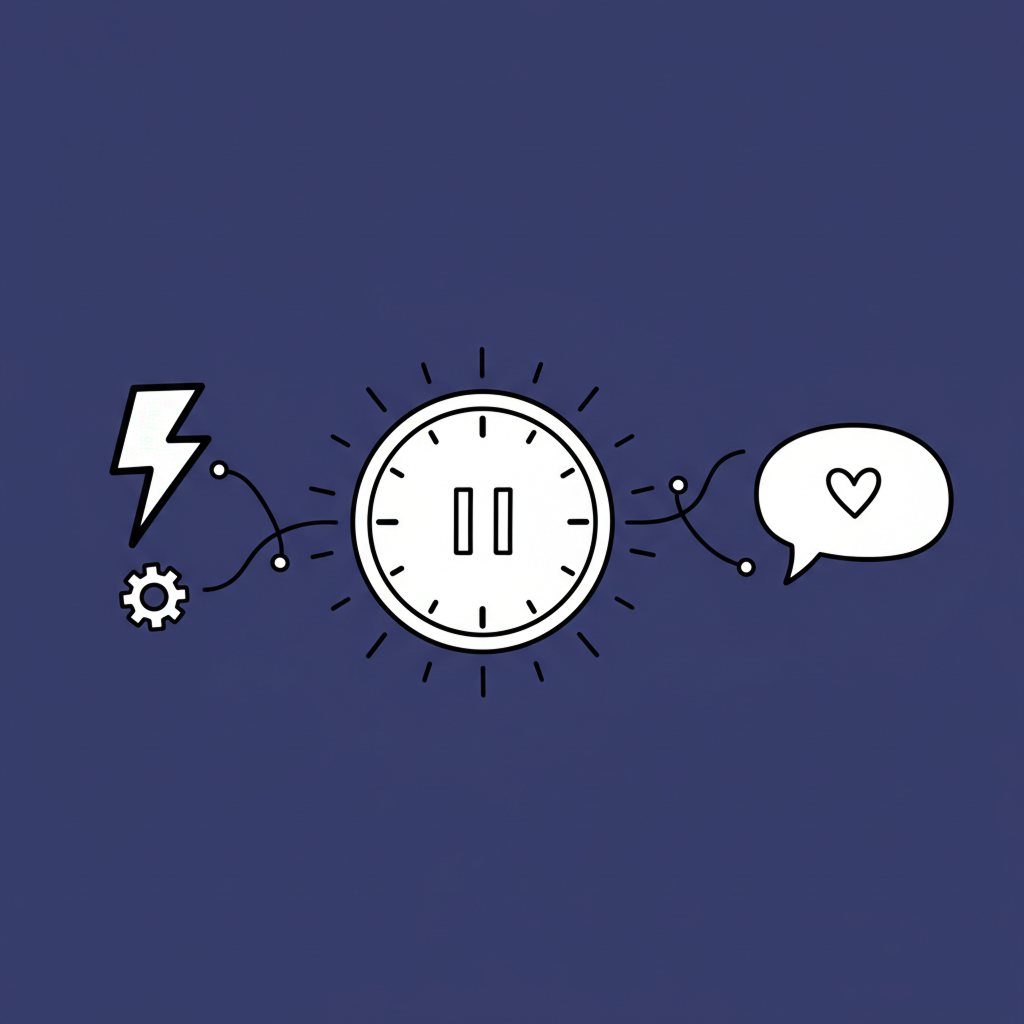
Exabloom’s analysis of over 1,000 leads revealed a critical insight: while instant AI responses are effective for capturing initial interest, a 10-20 second delay in follow-up interactions yields significantly better results. This slight pause creates the impression of a more thoughtful, human-like interaction, which leads to better engagement and conversion rates.
Why Instant AI Responses Can Backfire
- Improved Engagement with Delays: A short delay (10-20 seconds) before follow-ups makes the responses feel more deliberate, improving engagement by 30%.
- Robotic Perception: Instant AI responses can feel impersonal and damage trust. 90% of leads found instant responses “creepy” and requested human interaction.
Poor Key Inbound Lead Response Time Sequence Example: Speed Without Substance
Responding quickly is only effective if your message offers value. Here’s an example of a poor inbound lead response time sequence:
- First Response (Instant): “Thanks for your inquiry. We’ll be in touch.”
- Follow-Up (24 hours later): “Did you receive our email? Let us know if you’re interested.”
- Second Follow-Up (48 hours later): “Are you still considering our services?”
What’s wrong here?
- The responses are too generic and don’t address the lead’s specific needs.
- There is no value offered to the lead, leading to a loss of interest.
- The follow-ups fail to guide the lead toward an action or decision
Balancing Speed with Quality Follow Up
Quick responses are crucial, but thoughtful, personalized follow-ups matter just as much. Exabloom’s study found that instant AI replies without nuance can push leads away.
The optimal strategy is a fast initial response followed by a short delay in subsequent messages to simulate a more thoughtful reply.

Actionable Steps to Optimize Speed to Lead
- Instant First Response: Automate your first touchpoint with AI to immediately acknowledge the lead’s interest.
- Example: “Hi [Lead Name], thanks for your inquiry about [specific product/service]. Our team will be in touch shortly. Can I know [Problem lead is trying to solve]”
- Delay Follow-Up Responses by 10-20 Seconds: This simulates a more thoughtful response and increases engagement.
- Direct Response Method for AI Follow-Ups: Use AI to guide leads toward desired outcomes (e.g., scheduling a demo) while diverting complex questions to human agents for personalized attention.
Case Study: Education Enrichment Companies in Singapore
Exabloom’s research compared two educational enrichment companies in Singapore, highlighting the impact of thoughtful engagement on conversion rates.
Company A (Quick Response, Lower Closing Rate):
- Response Time: 3 minutes.
- Sales Approach: Automated but impersonal responses.
- Closing rate: 15%.
Company B (Thoughtful Engagement, Higher Closing Rate, Even Though Slower Response):
- Response Time: 5 minutes with a 10-20 second follow-up delay.
- Sales Approach: Personalized engagement with open-ended questions.
- Closing rate: 30%.
AI and Human Blended Response Strategy
To achieve the best results, combine AI’s efficiency with human follow-up. AI handles initial contact and routine follow-ups, while more complex inquiries are escalated to human agents for personalized attention.

Templates for Effective Lead Responses
Immediate AI Response
“Hi [Lead Name], thank you for your inquiry about [specific product/service]. May i know [problem that the Lead is facing]"
Follow-up after lead has reply (Human)
“Hi [Lead Name], I’ve reviewed your request and have tailored solutions that I believe will help. Do you have 15 minutes tomorrow to discuss?”
Top Strategies to Reduce Response Time Without Sacrificing Quality
- Use AI for Initial Contact: Automate first responses but route complex queries to humans.
- Lead Routing Based on Priority: Prioritize high-value leads for immediate attention.
- Seamless AI-Human Transition: Ensure smooth hand-offs from AI to human agents for more nuanced queries.
- Optimize Forms: Simplify lead forms to reduce friction but include qualifying questions for personalized follow-up.
Advanced Tools for Key Inbound Lead Response Time
- Chili Piper: Reduces lead response time by allowing instant booking.
- VanillaSoft: Automates outreach while maintaining personalization.
- Exabloom AI: Balances speed with quality by automating initial responses and follow-ups with AI.
Monitoring and Continuous Improvement
Track these key metrics to improve your inbound lead response time strategy:
- Response Time: How fast are you responding?
- Conversion Rates: How many of your fast responses turn into sales?
- Lead Drop-offs: Where are leads disengaging?
Conclusion: Speed Plus Smart Follow-Up = Success
Fast responses grab attention, but strategic, thoughtful follow-ups nurture leads into paying customers. By combining speed with smart, quality interactions, you’ll build stronger relationships and increase conversions.
In the age of AI, inbound lead response time isn’t just about being the fastest—it’s about being the smartest. With Exabloom’s findings, you can create a lead response system that’s both quick and effective.